Cinematography
At Cam Academy A comprehensive cinematography course is designed to take you from understanding basic camera mechanics to mastering visual storytelling on a professional film set. It bridges the gap between technical science (exposure, lenses, sensors) and creative art (composition, lighting mood, movement).
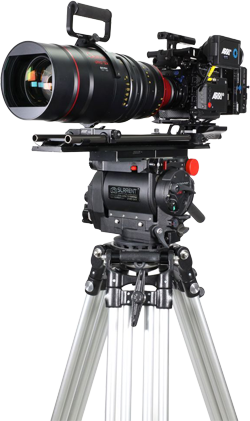
Camera Fundamentals & Optics
Before you can tell a story, you need to know your tool inside and out. This module focuses on the physics of the camera and image creation.
-
Optics & Lenses: Understanding the visual differences between prime lenses (fixed focal length) and zoom lenses, and how wide-angle vs. telephoto lenses alter spatial perspective and compression.
-
Optics & Lenses: Understanding the visual differences between prime lenses (fixed focal length) and zoom lenses, and how wide-angle vs. telephoto lenses alter spatial perspective and compression.
-
Depth of Field: How to control what is in focus to isolate characters or reveal environments.
-
Camera Sensors & Formats: Learning about resolution, dynamic range, and the structural differences between shooting on digital sensors vs. traditional celluloid film.
Visual Composition & Storytelling
Cinematography is more than just capturing a clean image; it is about guiding the audience’s emotions.
-
Shot Sizes & Framing: Utilizing Extreme Long Shots (ELS) down to Extreme Close-Ups (ECU) to build narrative tension or scale.
-
Camera Angles: The psychological impact of eye-level, low-angle (power/dominance), high-angle (vulnerability), and Dutch angles (disorientation).
-
Rules of Composition: Deep dives into the Rule of Thirds, leading lines, headroom, looking room, and deep vs. shallow space design.
-
The 180-Degree Rule: Maintaining spatial continuity across cuts so the audience doesn't get confused about where characters are facing.

The Art of Lighting
Lighting is arguably a cinematographer's most powerful tool for establishing time of day, genre, and emotional subtext.
-
Three-Point Lighting: The foundational framework using a Key Light, Fill Light, and Backlight (Rim Light) to create depth.
-
Lighting Quality:Shifting between Hard Light (sharp shadows, high contrast, dramatic) and Soft Light (gentle transitions, flattering, natural).
-
Color Temperature: : Managing the Kelvin scale, understanding the difference between warm tungsten light (3200K) and cool daylight (5600K), and mastering camera white balance.
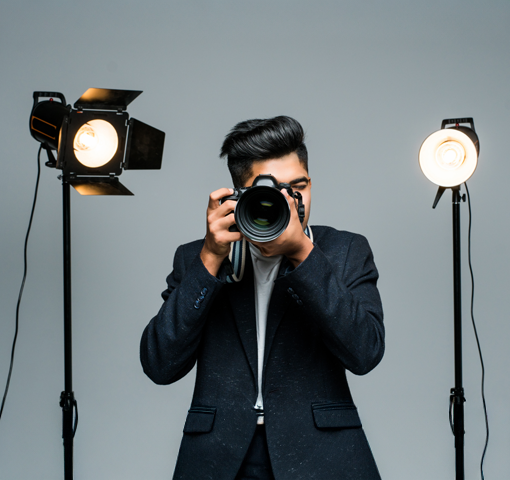
Professional Practice
Cinematography doesn't happen in a vacuum. This module covers the logistical reality of working with a crew.
-
The Camera Department Hierarchy: Understanding the roles of the Director of Photography (DP), 1st Assistant Camera (pulling focus), 2nd AC (clapper board/slating), and the Gaffer (chief lighting technician).
-
Scene Breakdown & Shot Lists: Collaborating with the Director to translate a text script into a structured visual shooting plan.
-
Color Science & Post-Production Prep: Shooting in "Log" profiles for maximum dynamic range, utilizing LUTs (Look-Up Tables) on set, and collaborating with digital colorists in the editing bay.
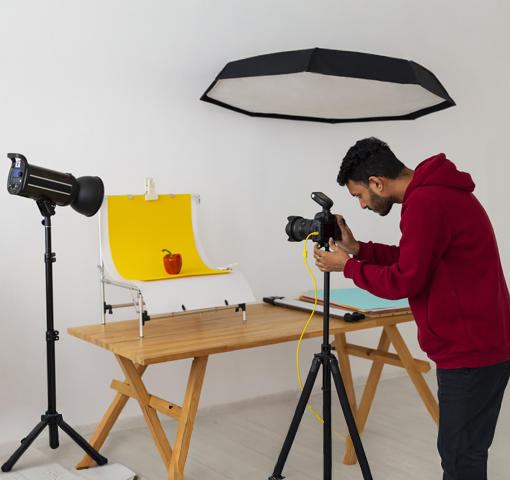
The Art of Lighting (The Director of Photography's Core)
Lighting is arguably a cinematographer's most powerful tool for establishing time of day, genre, and emotional subtext.
-
Three-Point Lighting: The foundational framework using a Key Light, Fill Light, and Backlight (Rim Light) to create depth.
-
Lighting Quality: Shifting between Hard Light (sharp shadows, high contrast, dramatic) and Soft Light (gentle transitions, flattering, natural).
-
Color Temperature: Managing the Kelvin scale, understanding the difference between warm tungsten light (3200K) and cool daylight (5600K), and mastering camera white balance.
-
Lighting Styles: Practical execution of High-Key lighting (bright, even, comedic/pop) vs. Low-Key lighting (dark, high-contrast, noir/thriller).